
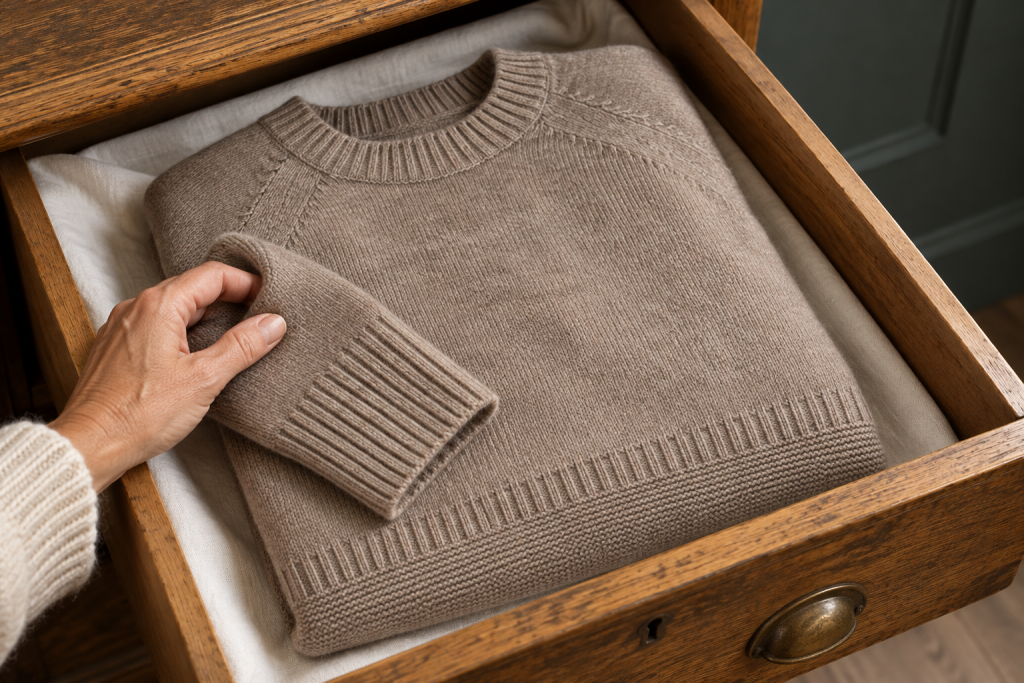
How long does a cashmere jumper last? There is no dependable number that applies to every piece. A well-made garment can remain useful for years, but its life depends on the yarn, the way it is knitted, how often it is worn and how it is looked after.
The more useful question is what will keep this particular jumper wearable. Softness at purchase matters, but so do a neckline that holds its shape, sleeves that suit your daily routine and small faults dealt with before they grow.
Quick answer: Cashmere has no fixed expiry date. Judge a jumper by its remaining fabric strength, fit and condition, rather than its age alone. Some pilling or a small repairable hole does not mean it is finished; widespread thinning or severe felting needs a different assessment.
How Long Does a Cashmere Jumper Last in Regular Wear?
A jumper worn occasionally and one worn several days a week accumulate wear at very different rates. Two people can own the same design for five years and have entirely different experiences. The calendar alone is therefore a poor measure of durability.
Think about the places that work hardest. Elbows rest on desks, cuffs touch work surfaces and a bag strap may rub the same shoulder on every journey. These patterns help explain why one area looks tired while the rest of the jumper remains sound.
There is no reason to retire a comfortable piece simply because it is no longer new. Equally, a claim that all cashmere should last a lifetime is too broad to help you assess a particular garment.
What Makes One Jumper Last Better Than Another?
The yarn
Fibre length and the way yarn is made influence how it wears. Immediate softness cannot tell you everything about its strength.
The construction
Look at even stitches, joins, cuffs and edges. Each should suit the garment’s design rather than depend on a vague promise of quality.
The way you use it
Repeated rubbing, strain and unsuitable cleaning can shorten useful life. Choose a piece that fits your routine as well as your wardrobe.
The Cashmere and Camel Hair Manufacturers Institute’s buying guidance discusses fibre length, fineness and knit tension. These are useful considerations, but they do not justify predicting a precise lifespan from a photograph.
For a fuller inspection before purchase, read what makes good cashmere. If the description relies heavily on gauge and ply, our knitwear gauge guide explains those terms. More plies do not automatically mean more years of wear.
Normal Surface Wear or a Sign to Take Action?
| What you see | What it may mean | A sensible next step |
|---|---|---|
| A few pills in rubbing areas | Loose surface fibres have gathered together | Check the fabric beneath and remove pills gently using a suitable tool. |
| A seam beginning to open | A local join needs attention | Ask a competent repairer before further wear enlarges the opening. |
| A small isolated hole | Damage that may be repairable | Inspect the surrounding fabric and discuss a discreet or visible repair. |
| Noticeable thinning at elbows | The fabric itself has worn down | Consider reinforcement or a patch; removing more surface fibres will not restore strength. |
| Dense fabric and major size loss after washing | Possible felting | Seek an assessment rather than pulling hard to recover the original size. |
Does pilling mean the cashmere is poor quality?
Not by itself. Friction can bring loose fibres together into small pills. Their amount and persistence depend on several factors, including yarn and construction. Watch what happens beneath them: a sound fabric with a little surface bobbling is different from one that is becoming thin.
Woolmark’s pilling guide explains the mechanism and care options. Work carefully with any comb or de-pilling tool, especially on fine knitwear. Repeated aggressive shaving removes material rather than renewing it.
Care That Fits Into Real Life
Choose a routine you will actually follow. If a garment needs a wash method you cannot accommodate, its care label is a practical buying consideration, not a minor detail.
Inspect cuffs and elbows when folding the jumper away. Deal with a loose stitch before it catches again, and notice whether the same bag or fastener repeatedly rubs one area. Small observations can be more useful than buying another care product.
Clean the piece when it needs it, following its label, and put it away fully dry. Our cashmere maintenance guide covers routine care. If the main change is in the outline rather than the surface, read about cashmere stretching and shape before trying to correct it.
When Is a Repair Worthwhile?
Start with the fabric around the damage. A small hole surrounded by sound knit may be a good candidate for repair. A much larger worn area can need reinforcement, which changes both the work involved and the appearance.
Ask a repairer what the result is likely to look like. Invisible mending is not always possible; a considered patch can be a good solution if you like it. Include how much you enjoy the garment in the decision, not only its original price.
A repair is not a guarantee of an invisible result. Matching yarn, stitch structure and the strength of the remaining fabric all matter. Agree on the expected finish before work begins.
Calculate Value From Wear, Not From a Promise
As an illustration, a £200 jumper worn 100 times has a purchase cost of £2 per wear, before cleaning and repairs. Worn only ten times, the same purchase costs £20 per wear. This is an example, not a forecast for any garment.
A shape that fits, feels comfortable and works with your existing clothes is more likely to be used. Buying “investment knitwear” does not create value on its own; wearing it does.
A Longevity Check Before Buying
- Read the full composition rather than relying on the product name.
- Inspect edges and seams as well as the soft body fabric.
- Choose enough room to move without persistent pulling.
- Check that the cleaning instructions fit your routine.
- Imagine at least three outfits you would wear with the piece.
Frequently Asked Questions
Can cashmere last for ten years?
It can, but ten years is not a reliable promise for every jumper. Frequency of wear, construction, care and damage all affect useful life. Judge the actual garment’s condition rather than a fixed target.
Does cashmere get better with age?
Some pieces feel softer with use and appropriate care, but ageing does not improve every aspect of a garment. Check for thinning, stretched areas and damaged seams as well as softness.
Should I throw away a cashmere jumper with a hole?
Not automatically. A small hole in otherwise sound fabric may be repairable. Ask a knitwear repairer about the options and the likely appearance of the repair.
Will a cashmere blend last longer than pure cashmere?
The percentages alone cannot answer that. Yarn, construction, fit and use matter too. Compare the actual pieces and choose the one suited to your daily wear.
Choose the piece that fits your life well enough to be worn again and again.
Discover cashmere and lambswool pieces

