
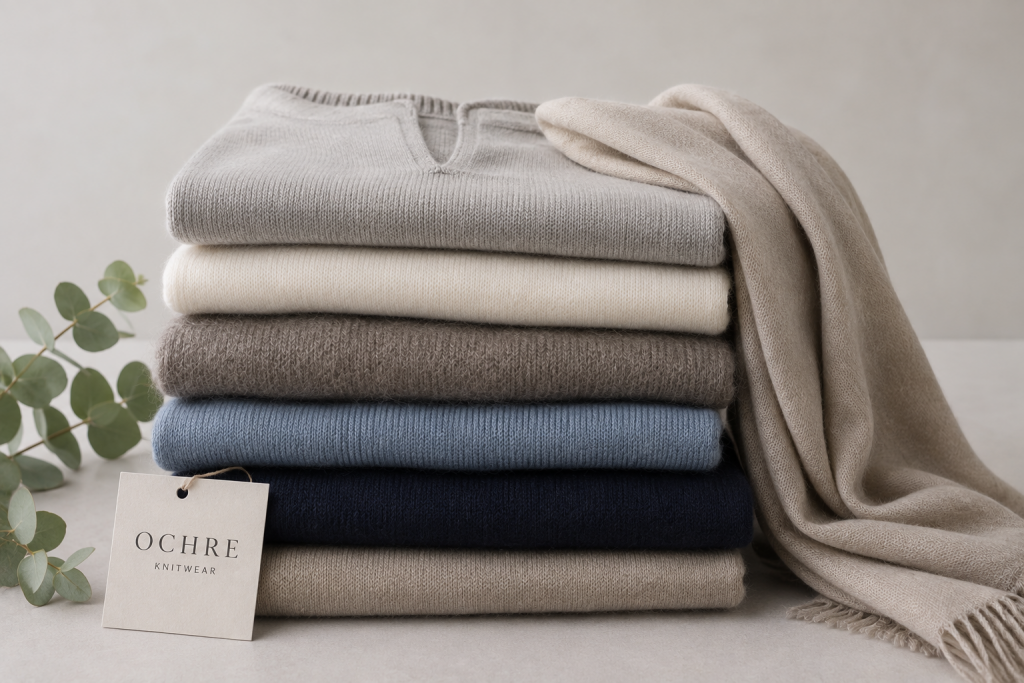
How to dress warm without looking bulky is one of the most useful questions in a winter wardrobe. The answer is not always a thicker jumper or a heavier coat. More often, it is about choosing pieces that give warmth in the right places: a soft natural-fibre jumper, an open knit layer through the body, and one fine scarf that can be added or removed as the day changes.
Bulky dressing usually happens when every layer is trying to do the same job. A thick base, a thick jumper, a thick scarf and a heavy coat all compete for space. The outfit may feel warm, but it can also look stiff and become uncomfortable indoors. A more elegant approach is quieter. Let each piece earn its place.
How to dress warm without looking bulky starts with better layers
The best warm outfits begin with layers that are soft, breathable and easy to move in. A jumper such as Ochre’s Row Split Neck Cashmere Blend Jumper works well because it gives natural warmth without a heavy, blocky shape. The split neckline opens the top of the outfit, while the rolled edges keep the finish relaxed rather than thick.
This is the kind of detail that matters. When the neckline feels lighter, the whole outfit appears less weighed down. The same is true of cuffs, hems and shoulder lines. A dropped shoulder can look soft and fluid when the knit itself is not too heavy. A rolled edge can make a jumper feel easier than deep ribbing. Small construction choices change how warmth looks on the body.
Choose warmth through the body, not only the arms
One of the easiest ways to stay warm without adding bulk is to warm the body first. If your core feels comfortable, you often need fewer heavy layers around the arms. That is why a women’s knit gilet can be such a useful piece. Ochre’s Rumi Dropped Sleeve Gilet is shaped with generous arm openings, a dropped sleeve line and a curved hem, so it layers over shirts, fine tops or relaxed knitwear without trapping the arms.
This is especially helpful for real life. Indoors, heavy sleeves can feel too warm. Outside, a full jumper may be needed for only part of the day. A sleeveless layer gives you the middle ground: warmth through the centre, movement through the shoulders, and a silhouette that still feels open.
Because Rumi is knitted in a cashmere and lambswool blend, it brings softness and warmth without relying on thickness alone. It gives shape to an outfit, but it does not hide everything underneath. A shirt collar, fine sleeve or simple jumper can still be seen, which makes the look feel more considered and less bundled.
Use a fine scarf instead of a heavy scarf
A scarf can make winter dressing feel finished, but it can also be the piece that makes an outfit look too full. The trick is choosing a scarf with warmth and movement rather than heavy volume. Ochre’s Fine Scarf is a good example because it has a long shape, soft drape and fine knit construction designed to layer without unnecessary bulk.
When a scarf is lighter, you can style it more precisely. Fold it once for a clean line, wrap it close when the wind picks up, or leave it open over a coat to add length. It gives warmth where you need it most, around the neck and chest, without making the whole top half feel crowded.
Think in slim warmth, not thick warmth
There is a difference between warmth that surrounds you and warmth that swallows the outfit. A thick chunky knit can be beautiful, but it is not always the easiest choice for everyday movement. Lighter natural fibres can often do more than expected because they trap warmth while still allowing the outfit to breathe.
This is where Ochre’s cashmere and lambswool blend knitwear becomes useful. Cashmere brings softness and a smooth hand feel. Lambswool adds warmth, resilience and a little structure. Together, they can create pieces that feel cosy without becoming dense or rigid.
The aim is not to remove texture. Texture is what makes winter dressing interesting. The aim is to choose texture that moves: soft ribbing, rolled edges, gentle drape, clean hems and layers that sit close enough to work under outerwear.
Keep one area of the outfit clean
If every part of an outfit is oversized, the shape can quickly feel heavy. Instead, choose one relaxed piece and keep the rest calmer. For example, pair a relaxed jumper with a more fluid trouser rather than several wide, thick layers. Or wear a gilet over a fine sleeve instead of layering two full jumpers together.
Leaving one area clean gives the eye somewhere to rest. An open neckline, a simple sleeve, a neat hem or a softer scarf fold can stop the outfit looking overbuilt. This is why accessories matter. A refined winter wardrobe is not only about the biggest pieces; it is also about the small layers that help everything sit better.
Let accessories do some of the work
Warmth does not need to come only from jumpers. Smaller pieces can make a huge difference without changing the whole silhouette. A scarf, wrap, gloves or wrist warmers can fill the cold gaps that make you reach for another bulky layer. Ochre’s Cashmere Travel Wrap is useful here because it can be worn over the shoulders, wrapped close or carried as an extra layer when the temperature drops.
It is a more flexible approach to winter dressing. Instead of committing to one heavy outfit all day, you can adapt. Add the wrap for the journey, remove it indoors, pull the scarf closer when the air changes, then let the jumper or gilet carry the outfit underneath.
What to avoid when you want warmth without bulk
Avoid layering too many thick cuffs at the wrist. They can make coat sleeves feel tight and uncomfortable. Also avoid several high necklines together unless the fabrics are very fine. A heavy collar, chunky scarf and thick coat lapel can make the neckline feel crowded.
Another common mistake is buying every winter layer oversized. One oversized piece can look elegant. Three oversized pieces can feel shapeless. Instead, use proportion: a relaxed jumper with a cleaner scarf, a gilet over a simple base, or a generous wrap over a neat knit.
Why natural fibre winter outfits feel easier
Natural fibres often feel better because they do not rely only on thickness. Wool, cashmere and lambswool can hold warmth while still allowing movement and breathability. That makes them easier to wear across a full day, especially when you move between cold streets, warm shops, cars, trains and homes.
This is the real secret of dressing warmly without looking bulky: build a wardrobe that can adjust. The right pieces do not fight each other. They sit together lightly, offer warmth where it matters, and keep the outfit looking calm.
Final thoughts
Learning how to dress warm without looking bulky is not about avoiding warmth. It is about choosing warmth with intelligence. Start with a soft natural-fibre jumper, add a sleeveless layer when you need body warmth, and finish with a fine scarf or wrap instead of piling on thickness.
The result is warmer, easier and more refined. You still feel protected from the cold, but the outfit keeps its shape. For a winter wardrobe, that balance is far more useful than bulk.
FAQ: Warm Knitwear Without Bulk
How can I dress warmly without looking bulky?
Use lighter natural-fibre layers instead of several thick pieces. A soft jumper, sleeveless knit layer and fine scarf can give warmth while keeping the silhouette cleaner.
Are gilets good for avoiding bulky outfits?
Yes. A knit gilet warms the body while leaving the arms freer, which helps the outfit feel less heavy under coats or indoors.
What kind of scarf is best when I do not want bulk?
A fine knit scarf with soft drape is usually easier than a chunky scarf. It can be folded, wrapped or worn loose without overwhelming the neckline.
Is cashmere blend knitwear warm enough for winter?
Yes, depending on the knit and styling. A cashmere and lambswool blend can feel warm, soft and breathable while staying lighter than very chunky knitwear.
What makes an outfit look bulky?
Too many thick layers in the same area usually create bulk, especially around the neck, cuffs and shoulders. Balance one relaxed piece with cleaner layers.


