
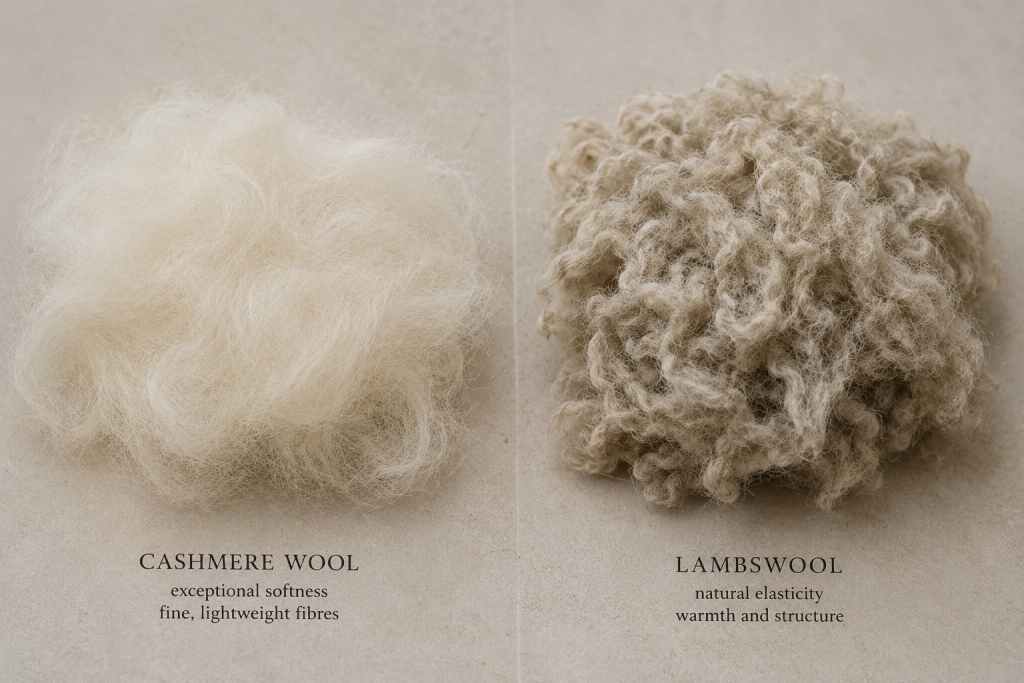
Cashmere vs lambswool is not a question of which fibre is simply “better”. It is a question of what you want the piece to do. Cashmere is known for its exceptional softness, lightness and quiet luxury. Lambswool brings softness too, but with more natural bounce, resilience and structure. Together, they explain why some knitwear feels fluid and delicate, while other pieces feel warmer, fuller and easier to wear often.
At Ochre, the difference matters because our wardrobe is built around natural fibres that have a real purpose. Some pieces are made from pure 100% cashmere for softness and drape. Others use a cashmere and lambswool blend to balance comfort, warmth and everyday strength.
Cashmere vs lambswool: the simple difference
Cashmere comes from the fine undercoat of cashmere goats. It is prized because the fibres are very fine, soft and light, giving the material its smooth handle and warm-but-airy feel. Ochre’s Cashmere Mix Guide explains that cashmere is valued for softness, warmth and a luxurious feel.
Lambswool comes from the first shearing of a lamb. It is softer than many ordinary wools and naturally elastic, which helps a knitted piece stretch and recover its shape. That makes lambswool especially useful when a garment needs warmth, body and a little more structure.
Cashmere feels lighter and more fluid
Pure cashmere has a soft, gentle quality that makes it ideal for pieces worn close to the skin or draped around the body. It feels warm without needing to be heavy. This is why cashmere works beautifully in scarves, shawls and wraps, where movement and softness are just as important as insulation.
Ochre’s Cashmere Travel Wrap is a good example. It is made from 2-ply 100% cashmere and designed to work as a soft layer for travel, evenings, cool rooms and everyday comfort. It gives coverage without the fixed feeling of a coat.
Lambswool gives warmth, bounce and structure
Lambswool has a different character. It still feels soft, but it has more spring and natural body than pure cashmere. That can be very useful in knitwear because a jumper, cardigan or scarf needs to keep its shape, sit well on the body and recover after wear.
When lambswool is blended with cashmere, it can make the piece feel more practical for regular use. The cashmere adds softness and warmth, while the lambswool adds resilience, insulation and structure. This is why a cashmere and lambswool blend can be such a strong everyday choice.
Why Ochre uses cashmere and lambswool together
A good blend is not a compromise. It is a different kind of luxury. Ochre’s Lola V-Neck Cardigan is made from 30% cashmere and 70% lambswool. The cashmere gives a soft, luxurious hand feel, while the lambswool adds durability, insulation and shape retention. This makes the cardigan feel premium but still useful for regular wear.
The same idea works in smaller accessories. Ochre’s Bontie Bandana Scarf is also made from 30% cashmere and 70% lambswool. Because it sits close to the neck, softness matters. Because it is tied, looped and worn often, structure matters too. The blend gives both.
Which is softer: cashmere or lambswool?
Cashmere is usually softer and finer than lambswool. That is why pure cashmere feels so smooth, especially in a shawl or wrap. However, softness is not the only thing that makes knitwear enjoyable. A piece also needs to hold its shape, feel secure on the body and suit the way you live.
If you want the softest possible drape, pure cashmere is beautiful. Ochre’s Cashmere Shawl shows that light, fluid side of the fibre. If you want knitwear that still feels soft but has more body for daily wear, a cashmere and lambswool blend may be more useful.
Which is warmer: cashmere or lambswool?
Both fibres are warm, but they feel warm in slightly different ways. Cashmere is prized for warmth without weight. It can feel surprisingly insulating even when the fabric is light. Lambswool gives a fuller wool warmth with natural bounce and loft, which can make a garment feel cosy, reassuring and structured.
The better choice depends on the piece. A pure cashmere wrap is excellent when you want a soft layer that folds easily and feels elegant. A cashmere and lambswool cardigan or scarf is excellent when you want warmth, softness and a knit that can work hard through regular wear.
How to choose between cashmere and lambswool
Choose pure cashmere when you want softness, lightness and fluid drape. It is ideal for shawls, wraps and pieces that feel special against the skin. Choose lambswool, or a cashmere and lambswool blend, when you want more structure, resilience and everyday practicality.
For many wardrobes, the best answer is not one fibre or the other. It is both, used in the right places. A pure cashmere wrap can bring quiet softness to travel, evenings and indoor warmth. A cashmere and lambswool cardigan or scarf can give shape, comfort and durability for more regular layering.
That is the real lesson in cashmere vs lambswool: good knitwear is not only about fibre names. It is about how the fibre behaves when you wear it.
FAQ
What is the difference between cashmere and lambswool?
Cashmere comes from the fine undercoat of cashmere goats and is known for softness, warmth and lightness. Lambswool comes from the first shearing of a lamb and is valued for softness, warmth, bounce and natural structure.
Is cashmere softer than lambswool?
Yes, cashmere is usually softer and finer than lambswool. Lambswool can still feel soft, but it has more spring and body, which helps knitwear keep its shape.
Is lambswool warmer than cashmere?
Both fibres are warm. Cashmere gives warmth with very little weight, while lambswool gives a fuller wool warmth with more structure and bounce.
Why blend cashmere with lambswool?
A cashmere and lambswool blend combines softness with resilience. Cashmere adds a luxurious hand feel, while lambswool adds durability, insulation and shape retention.
Which should I choose for everyday knitwear?
For everyday knitwear, a cashmere and lambswool blend can be very practical because it feels soft but has more structure. For wraps and shawls, pure cashmere is beautiful when softness and drape are the priority.


