
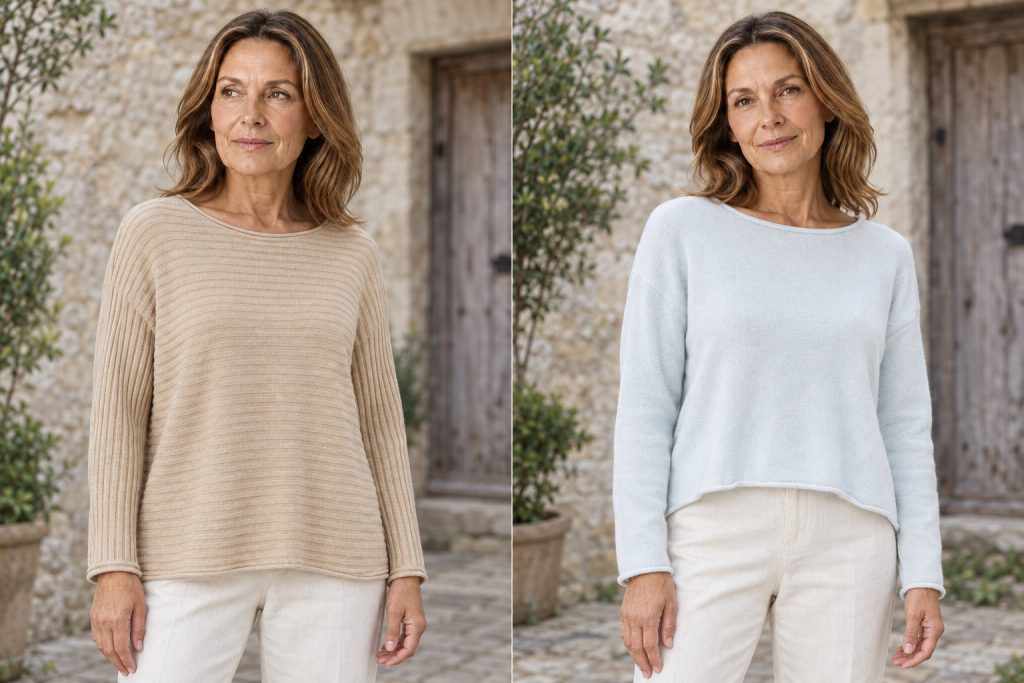
If you are weighing up cotton vs wool jumpers, warmth is only part of the decision. A knit that feels right on a cold morning can become too warm in a heated office. Equally, the cotton jumper you love at home may need another layer when you head outside.
Start with where you spend your day, how easily you feel the cold and what you like against your skin. Then look at the actual garment: its thickness, shape and care label matter alongside the fibre.
Cotton vs Wool Jumpers at a Glance
These are useful starting points, rather than promises about every jumper. A loose, open stitch lets in more air than a closely knitted fabric, whichever fibre you choose.
| What matters | Cotton jumpers | Wool jumpers |
|---|---|---|
| Warmth | Useful when you want a layer without too much insulation. | A strong choice when keeping warm is the main concern. |
| Feel | Often smooth and comfortable next to the skin. | Varies with the wool, yarn and finish; some feel soft, others more textured. |
| Breathability | A breathable option for everyday wear. | Breathable too; wool can absorb and release moisture vapour. |
| Layering | Check the weight and sleeve width, particularly in heavier cotton knits. | A finer knit can add warmth beneath a coat without much bulk. |
| Care | Some allow gentle machine washing; check the label. | May need hand washing or a specified wool cycle; check the label. |
Are Wool Jumpers Warmer Than Cotton?
Wool is generally the better starting point when you want warmth without choosing a very heavy jumper. Its fibres have a natural waviness, called crimp, which helps hold insulating air. Woolmark explains how this fibre structure works.
However, warmth is also about construction. A thin, open wool knit will not automatically feel warmer than a thick, closely knitted cotton jumper. The layer underneath and the coat over the top change the result as well.
For a cold commute, try your jumper beneath the coat you actually wear. Can you bend your arms without the sleeves bunching? Does the neckline leave room for a scarf? Those small checks are more useful than buying the thickest knit you can find.
Which Is More Comfortable Indoors?
Cotton is worth considering if you often take your jumper off as soon as you arrive somewhere. A finer cotton knit gives you coverage and texture without committing to a heavily insulating layer. CottonWorks identifies breathability and softness among cotton’s useful clothing properties.
Wool is breathable too. In particular, Merino wool can absorb and release moisture vapour, so a fine wool jumper need not feel stuffy. Even so, a thick wool knit may be more warmth than you need in a well-heated room.
If most of your day is spent indoors, browse Ochre’s organic cotton knitwear with that setting in mind. Think about your usual room temperature before the weather forecast.
Softness: Choose the Garment, Not Just the Fibre
Some people enjoy wool directly against their skin; others prefer a cotton layer underneath it. Wool varies considerably, so one prickly jumper does not tell you how every wool knit will feel. Cotton fabrics vary too, from smooth, fine surfaces to firmer, more textured stitches.
If you can try a jumper on, pay attention to the neckline and inside of the sleeves. If you are buying online, look closely at the fibre composition and surface texture. “Organic” describes how cotton is grown; it is not, by itself, a guarantee of a softer jumper.
Choose for the Day You Actually Have
Mostly indoors
Start with fine cotton if you run warm. Wear it with trousers or a skirt, then add your outdoor warmth through a coat you can remove when you arrive.
Out in the cold
Consider wool beneath your outer layer. Choose enough room for a base underneath, without so much fabric that the jumper gathers inside your coat.
A bit of both
Try a lighter jumper in either fibre. Make sure it works with a removable jacket, rather than expecting one heavy knit to feel right everywhere.
Two Ochre Jumpers to Compare
Lark: a relaxed organic cotton option
The Lark Organic Cotton Jumper is made from 100% organic cotton. Its wide rolled neckline, relaxed shape and textured knit make it a useful example if you want an everyday cotton layer.
Try it with straight-leg trousers and simple shoes for days spent between home, work and errands. Check the sleeve space beneath your jacket, especially if you also plan to wear a shirt underneath.
Egg: a cropped lambswool and cashmere blend
The Egg Cropped Boxy Jumper contains 70% lambswool and 30% cashmere. It is a blend, rather than a 100% wool jumper, with a shorter body, relaxed width and rolled neckline.
Its cropped shape is worth considering with higher-waisted trousers or a skirt when you would rather leave the hem loose than tuck in a longer knit. For similar fibre combinations in other shapes, explore Ochre’s lambswool and cashmere knitwear.
These two pieces differ in both fibre and cut. Compare their measurements with a jumper you already enjoy wearing, so you are choosing the right shape as well as the material.
Care: Read the Label Before You Buy
A jumper needs to fit your laundry routine too. Do not assume every cotton knit belongs in a normal machine wash, or that every wool jumper needs dry cleaning.
Lark’s current product guidance recommends gentle washing, avoiding high heat and reshaping to dry flat. Egg’s guidance specifies cold hand washing or dry cleaning. Always follow the care label on the garment you receive.
For wool, use an appropriate wool detergent and avoid wringing. Woolmark recommends drying knitwear flat to help preserve its shape. Support the wet garment and keep it away from direct heat.
Before You Choose Your Jumper
- Decide where you will wear it most: a warm room, outdoors or both.
- Read the full composition, including the percentages in a blend.
- Compare the body length and width with a jumper you already own.
- Allow space for your usual base layer and outer coat.
- Choose a washing routine you are happy to follow.
Frequently Asked Questions
Can you wear cotton jumpers in winter?
Yes. Cotton jumpers can work well indoors in winter, or beneath a warmer outer layer. For long periods outside in cold weather, consider a more insulating wool knit and a suitable coat.
Is a wool jumper always itchy?
No. The feel depends on the wool fibres, yarn and finish, as well as your own preferences. Fine wool can feel soft, while other knits have a more textured feel. A light base layer can help if you prefer fabric between your skin and the jumper.
Should I choose cotton or wool if I get too warm?
Begin with a fine cotton knit or a lightweight wool option, rather than a thick jumper in either fibre. Check the stitch density, fit and layers underneath. Breathable fabric still needs to be the right weight for the room or weather.
Is a lambswool and cashmere blend the same as pure wool?
No. Lambswool comes from sheep, while cashmere comes from cashmere goats. A blend combines the stated fibres. Check the percentages on the label: Ochre’s Egg jumper contains 70% lambswool and 30% cashmere.
Which jumper should I buy if I only want one?
Choose for your most common setting. Cotton is a useful starting point if you spend most days in warm rooms; wool is worth considering if you often feel cold. Then choose a weight and fit that work with the clothes you already own.
The right jumper earns its place in the days you wear it most. Choose the fibre, shape and weight that work with your own wardrobe.
Explore women’s jumpers

