
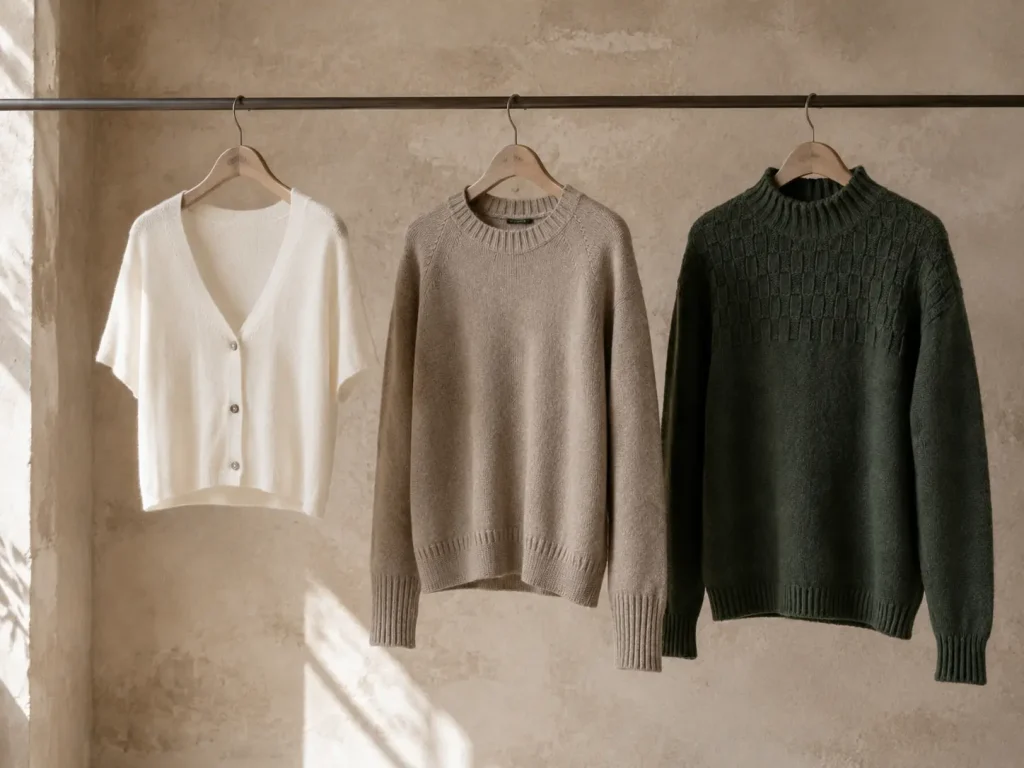
This cashmere weight guide explains the practical difference between lightweight, midweight and chunky knitwear. Lightweight cashmere is fine, low-bulk and easy to layer; midweight cashmere has more body and works well as an everyday jumper; chunky cashmere feels fuller, more textured and better suited to colder conditions.
Those labels are useful, but they are not universal technical standards. Two brands can describe different fabrics as “midweight”, and even two pieces with the same gauge or ply can feel different. The best choice comes from reading several clues together: fibre content, gauge, ply, stitch structure, garment size and the way you plan to wear it.
The short answer: choose lightweight for indoor wear, travel and layering under jackets; midweight for a versatile standalone knit through autumn and winter; chunky for strong texture, maximum cosiness and cold days when extra bulk is welcome.
Cashmere Weight Guide at a Glance
| Weight | How it tends to feel | Best for | What to check |
|---|---|---|---|
| Lightweight | Fine, smooth, breathable and low in bulk | Transitional weather, offices, evenings, travel and close layering | Fine construction, drape, transparency and whether it is intended as a top or layer |
| Midweight | Soft with noticeable body, but still easy to move and layer | Everyday jumpers, cardigans and regular autumn-to-winter wear | Stitch density, cuffs and hems, garment measurements and room under a coat |
| Chunky | Substantial, textured, lofty or visibly knitted | Cold days, relaxed outer layers and low-heated rooms | Bulk at the neck and sleeves, garment weight, stitch structure and storage needs |
What Does Cashmere Weight Actually Mean?
In everyday shopping language, “weight” describes the overall substance of the finished knit. It is what you notice when you pick up the garment: how light or full it feels, how much space it takes up, how closely it sits and how much warmth it seems to hold.
That is different from the number on the scales alone. A long cashmere wrap may use more yarn than a cropped cardigan simply because it covers a larger area, yet its fabric can still be fine and fluid rather than chunky. A compact fisherman’s jumper may feel much denser because of its yarn and stitch construction.
Warmth and weight are related, but they are not identical either. Cashmere fibres are valued for trapping insulating air without requiring a very heavy fabric. A fine cashmere layer can therefore feel surprisingly warm for its weight, while a chunky knit adds both insulation and physical bulk.
Gauge, Ply and Garment Weight Are Different
Gauge describes the knitting-machine setup and helps indicate stitch size and density. In general, a higher gauge produces finer, smaller stitches, while a lower gauge produces larger, more visible stitches. Ochre’s guide to gauge in knitwear explains this in more detail.
Ply describes the number of strands brought together in a yarn. It is another useful clue, but it is not a universal thickness scale. Two 2-ply yarns can differ because the individual strands, fibre, spinning and finishing differ. A higher ply often creates a fuller yarn, but it does not tell you the finished garment weight on its own.
To judge a knit properly, read gauge and ply alongside the fibre blend, stitch pattern, dimensions and shape. Ribbing, cables, textured yokes and dense stitches may use more yarn than plain knit. Longline cardigans, oversized shapes and wraps also carry more material than short, close-fitting pieces.
Useful rule: gauge tells you about the knitting setup, ply tells you about the yarn construction, and total grams tell you how much the finished garment weighs. None of these alone tells the complete story.
Lightweight Cashmere: Fine, Flexible and Easy to Layer
Lightweight cashmere works when you want softness without much volume. It sits neatly under a blazer or coat, travels easily and is comfortable in buildings where the temperature changes during the day. Fine cardigans and short-sleeve knits can also extend dresses and sleeveless outfits beyond summer.
Look for a smooth surface, smaller stitches and a fabric that falls rather than stands away from the body. Remember that lightweight does not have to mean delicate-looking or sheer. Good construction can give a fine knit a clean shape while preserving its easy drape.
Ochre’s Nano Button Short Sleeve Cardigan is a useful cashmere-blend example: it is described as a lightweight 9-gauge, 2-ply knit, with short sleeves and a cropped shape intended for breathable layering.
Midweight Cashmere: The Everyday All-Rounder
Midweight knitwear is often the most versatile choice for the UK. It has enough body to wear as the main layer, but usually remains comfortable under a winter coat. It suits cool autumn days, heated interiors and the frequent movement between indoors and outside.
A good midweight piece should feel substantial without restricting movement. Check the cuffs, neckline and hem: deeper ribbing adds structure and may make those areas feel fuller than the body. Also compare the garment’s flat measurements with a jumper you already own, because a relaxed cut changes how warm and bulky a knit feels in practice.
The Devon Raglan Sleeve Jumper illustrates this middle ground. Its 30% cashmere and 70% lambswool fabric uses a 7-gauge, 3-ply construction for a warmer, more substantial handle without being described as bulky.
Chunky Cashmere: Texture, Presence and Cold-Weather Warmth
Chunky cashmere and cashmere-blend knitwear is designed to be noticed. Larger stitches, thicker yarn and textured construction create depth and a cosy, tactile surface. This is the weight to choose when you want the knit itself to act as a strong outer layer rather than disappear beneath tailoring.
The trade-off is volume. A chunky cuff may feel tight beneath a fitted coat sleeve, and a deep roll neck can be too warm in heated rooms. Chunkier knits also occupy more drawer space and should be stored folded so their weight does not stretch the shoulders.
The Ed Fisherman’s Jumper is an Ochre cashmere-blend example of a heavy knit. Its deep ribbed neck, block-knit yoke and ribbed trims create the visual substance associated with a chunky cold-weather style.
Three Ochre Knits, Three Different Jobs
Lightweight
Nano cardigan
Fine, cropped and short-sleeved for a gentle layer over dresses, vests or high-waisted separates.
Midweight
Devon jumper
More body, long sleeves and structured ribbing for repeat everyday wear in cooler weather.
Chunky
Ed fisherman’s jumper
A heavy-knit shape with a deep ribbed neck and textured yoke for cold-weather presence.
These are cashmere–lambswool blends rather than three identical pure-cashmere garments. That is deliberate: the comparison shows how construction and design change the finished feel. Fibre percentage alone cannot place every knit into a weight category.
Which Cashmere Weight Is Best for UK Weather?
For most British wardrobes, midweight is the easiest starting point. It can be worn on its own in autumn, layered over a fine base in winter and kept nearby for cool spring evenings. If you spend much of the day indoors or dislike bulk beneath a coat, a lightweight knit may earn more wear.
Chunky knitwear makes sense when you run cold, spend time outdoors or prefer a jumper to do the work of a light jacket. It is also a strong choice for draughty homes and weekends when comfort matters more than fitting beneath tailored outerwear.
Think in terms of a small system rather than one “perfect” weight: a fine layer for flexibility, a midweight jumper for most days and one substantial knit for real cold. That combination covers more situations than owning several pieces that all perform the same job.
How Weight Changes Fit and Drape
Lightweight fabric tends to follow the body and show the line of whatever sits beneath it. Midweight fabric usually has enough structure to skim without clinging. Chunky fabric stands further away from the body and adds visible volume, especially at dropped shoulders, sleeves and high necklines.
This does not mean chunky pieces must be oversized or fine pieces fitted. Shape and fabric work together. A fine relaxed cardigan can drape generously, while a dense compact jumper may hold a neat silhouette. Always use the product measurements rather than relying only on the words “relaxed”, “regular” or “oversized”.
How to Choose Cashmere Weight Online
- Read the full fibre content. Pure cashmere and cashmere blends can have different structure, resilience and handle.
- Check gauge and ply together. Treat them as clues, not a complete verdict.
- Study close-up photographs. Look at stitch size, texture, ribbing and how firmly the garment holds its shape.
- Check every measurement. Length, chest width and sleeve shape affect both coverage and perceived weight.
- Picture the layers around it. Decide whether it must fit over a shirt, beneath a coat or work as the outermost layer.
- Ask when the description is unclear. A useful retailer should be able to explain whether a piece feels fine, substantial or heavy.
Does Care Change With Cashmere Weight?
The same gentle principles apply to every weight: follow the care label, avoid hot water and friction, reshape carefully and dry flat. The difference is handling. Fine knits need protection from snagging and should not be stretched when wet. Chunky pieces absorb more water, become heavier during washing and need strong, even support while drying.
Store all cashmere and cashmere blends clean and folded. Avoid hanging heavy knits, as gravity can pull the shoulders and length out of shape. Between wears, allow the fibres to rest and use a cashmere comb only when needed, with a light hand.
Cashmere Weight Questions
What is lightweight cashmere?
Lightweight cashmere is a fine, low-bulk knitted fabric designed for breathable warmth and easy layering. The term is relative rather than standardised, so check gauge, ply, construction and garment measurements too.
Is 2-ply cashmere always lightweight?
No. Ply counts the strands used in the yarn, not the finished garment weight. The thickness of each strand, gauge, stitch structure, size and finishing all affect how a 2-ply piece feels.
Does a higher gauge mean lighter cashmere?
A higher gauge usually creates finer, smaller stitches and often supports a lighter-looking fabric. It does not guarantee a lighter garment because yarn thickness, ply, density and garment size also matter.
Is chunky cashmere always warmer?
Chunky cashmere usually holds more insulating air and gives fuller coverage, but warmth also depends on density, fit, wind exposure and the layers worn with it. Heavier and warmer are not exact synonyms.
What cashmere weight is best for UK weather?
Midweight is the most versatile starting point for many UK wardrobes. Choose lightweight if you spend more time indoors or layer often, and chunky if you run cold or want a substantial outer knit.
How can I judge cashmere weight when shopping online?
Read the fibre content, gauge and ply; inspect close-up photographs; check measurements and fit; and look for language such as fine, substantial or heavy knit. Ask the retailer if the description does not make the feel clear.
Find the Weight That Works for You
Explore fine layers, everyday jumpers and more substantial designs in Ochre’s cashmere and lambswool collection.
Explore cashmere-blend knitwear

