
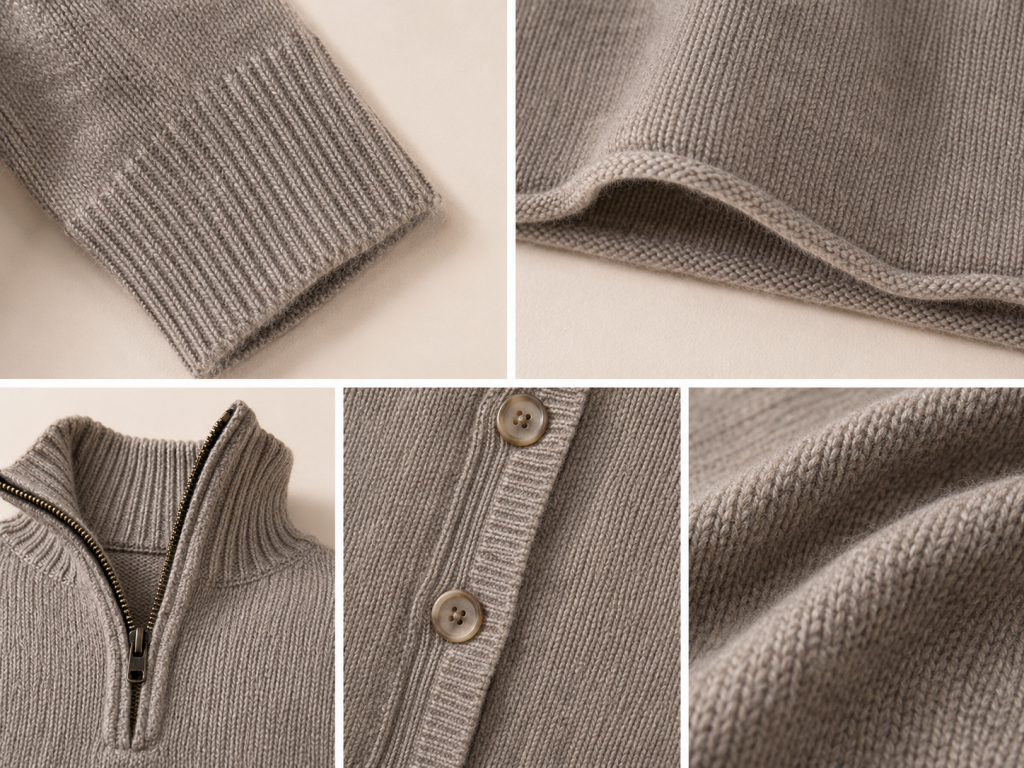
Luxury jumper details are often felt before they are noticed. A jumper can look simple on the hanger, yet feel immediately more refined once it is touched, worn and seen in movement. At Ochre, that quiet difference usually comes from natural fibre, considered shape, balanced weight and careful finishing across the neckline, cuffs and hem. It is why the best women’s and men’s jumpers do not need to shout to feel special.
An expensive-feeling jumper is not defined by a large logo or a trend-led colour. In fact, the opposite is often true. The pieces that feel most luxurious tend to have restraint. They sit well on the body, soften with wear, hold their shape, and make everyday dressing feel calmer. Once you know what to look for, the signs are surprisingly clear.
Luxury jumper details begin with fibre
The first clue is the fibre. A beautiful jumper starts with what the yarn is made from, because fibre decides how the knit feels against the skin, how it warms, how it moves and how it ages. Synthetic shine can sometimes make a garment look flat. Natural fibres tend to have more depth, more warmth and a more interesting surface.
A refined cashmere and lambswool blend gives softness with a little structure. Cashmere brings smoothness and a gentle hand feel, while lambswool adds warmth, body and resilience. This matters because a jumper should not only feel soft on day one. It should continue to feel useful, shaped and wearable over time.
Organic cotton offers a different kind of luxury. In the organic cotton knitwear collection, the appeal is breathability, clean texture and easy everyday comfort. A cotton jumper can feel expensive when the shape is strong, the yarn has substance and the finishing is calm rather than overworked.
Then there is yak wool, which brings its own quiet character. Ochre’s yak wool knitwear has a natural warmth and earthy depth that suits understated luxury especially well. It does not need glossy presentation. The fibre itself carries the story.
Texture is where the eye lingers
Premium knitwear texture is not about being busy. It is about surface interest. A good knit has life when you look closely: small fibre movement, even stitching, a balanced gauge and a softness that catches light without looking shiny. The surface should feel alive, not flat.
This is one reason natural fibres work so well in simple designs. When the yarn has depth, the jumper does not need extra decoration. A plain body can still look rich because the knit texture is doing quiet work. It gives the garment character before any styling is added.
The neckline tells you a lot
A neckline is one of the quickest ways to judge whether a jumper has been designed carefully. It frames the face, sets the mood of the garment and affects how the whole piece sits. A rolled neckline feels softer and more relaxed. A ribbed stand collar feels more structured. A split neck or open collar brings shape without stiffness.
What matters is intention. The neckline should belong to the jumper, not look as if it has been added without thought. If the body is relaxed, the neckline should balance that softness. If the knit is clean and masculine, a stand collar or quarter zip can give useful structure. Expensive-feeling knitwear usually has this balance: the detail is practical, but it also improves the silhouette.
Ribbing should feel neat, not harsh
Ribbed cuffs, hems and collars are small details, but they change everything. Good ribbing gives the garment shape and recovery. It helps the sleeve sit properly at the wrist, keeps the hem from collapsing and gives the neckline definition. Poor ribbing can look thin, stretched or heavy compared with the rest of the knit.
A ribbed cuff detail feels expensive when it is firm enough to hold the shape, but soft enough to remain comfortable. The transition between the plain knit and the rib should look clean. These are the details customers may not describe out loud, yet they often explain why one jumper feels better than another.
Drape is different from oversized
Drape is another quiet sign of quality. A jumper can be relaxed without looking shapeless. It can have width without becoming heavy. The best pieces allow space around the body while still holding a line. This is where cut, yarn and gauge all work together.
A jumper feels expensive when the fabric falls naturally. It should not cling awkwardly, collapse at the shoulder or twist through the body. A relaxed shape can still look polished if the shoulder, sleeve and hem have been considered. In fact, this is often where understated knitwear becomes most impressive: it looks easy because the construction is doing the work.
Refined jumper finishing is usually quiet
Some of the most important details are the least obvious. Look at how the side seam sits. Notice whether the sleeve has enough room to move. Check if the hem rolls or ribs in a way that suits the body shape. These finishing choices affect comfort as much as appearance.
Refined jumper finishing also means restraint. Not every piece needs contrast colour, complicated texture or visible hardware. Sometimes the most expensive-feeling choice is a clean rolled edge, a smooth button line, or a zip that sits neatly inside a ribbed collar. The detail should support the garment rather than interrupt it.
Good knitwear feels useful, not precious
True luxury is not only softness. It is usefulness. A jumper that feels expensive should still feel wearable in ordinary life. It should layer under coats, work with trousers, soften denim and sit comfortably through the day. If a piece feels too delicate to wear, it may be beautiful, but it will not become part of a real wardrobe.
This is why slow fashion knitwear needs more than a premium fibre label. It needs practical proportion, sensible care, quality construction and a reason to be worn again. When those elements come together, a jumper becomes more than seasonal clothing. It becomes one of the pieces you reach for without thinking.
Making matters as much as material
The final difference is the relationship between design and making. A jumper may begin with yarn, but it becomes special through construction: the shaping, the tension, the finishing and the small decisions that make it comfortable. Ochre’s approach is rooted in natural fibres and skilled production, with pieces made in Kathmandu and designed to be worn for years. You can read more about the brand’s ethical knitwear made in Nepal.
That making story matters because expensive-feeling knitwear is not only about appearance. It is about trust. You can feel when a garment has been considered, when the fibre suits the shape, and when the details have been chosen for comfort rather than decoration alone.
A simple checklist before buying
Before choosing a jumper, look closely. Is the fibre natural and suitable for how you want to wear it? Does the neckline flatter without pulling? Do the cuffs and hem feel secure but soft? Does the body hang with ease? Does the texture look alive rather than flat? These questions reveal more than a price tag ever can.
The best luxury jumper details are not loud. They are the things you keep enjoying after the first wear: the soft edge at the neck, the warm but breathable handle, the way the sleeve sits, the quiet shape of the hem and the confidence of a garment that does not need too much styling.
Final thoughts
What makes a jumper feel expensive is not one single feature. It is the conversation between fibre, texture, fit, finishing and use. A jumper feels refined when each of those details supports the others. It should look calm, feel comfortable and carry enough design intelligence to make simple outfits better.
That is the kind of luxury that lasts. Not loud, not complicated, not dependent on fashion noise. Just beautiful natural fibre knitwear, made with detail you can feel.
FAQ: Luxury Jumper Details
What details make a jumper look expensive?
The most important details are natural fibre, even knit texture, a well-shaped neckline, neat ribbing, balanced drape and clean finishing at the cuffs, hem and seams.
Does a jumper need to be cashmere to feel luxurious?
No. Cashmere can feel beautiful, but organic cotton, lambswool, yak wool and merino can also feel luxurious when the yarn, construction and fit are well considered.
Why does ribbing matter on a jumper?
Ribbing helps the cuffs, hem and neckline keep their shape. Good ribbing feels secure without being tight, and it gives the garment a more finished appearance.
How can I tell if a jumper has good drape?
A jumper with good drape falls naturally from the shoulder and body without clinging, twisting or collapsing. It should create ease while still holding a clear shape.
What is the difference between simple and plain knitwear?
Simple knitwear is carefully designed but understated. Plain knitwear can feel flat if the fibre, shape and finishing are not considered. The difference is in the detail.


