
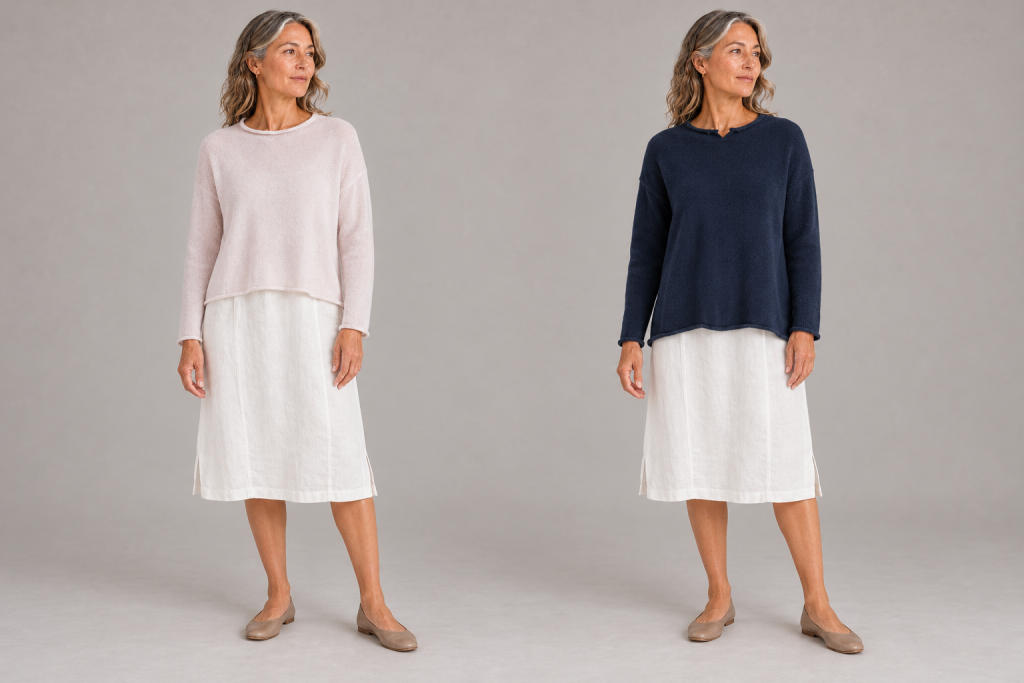
Wearing a jumper over a dress is an easy way to keep a favourite outfit in use as the weather cools. However, the combination can feel awkward when a hem catches at the waist, sleeves gather underneath or too much fabric sits in one place. The solution usually starts with shape and length.
Before choosing another knit, try the dress with a jumper you already own. Look at where the two pieces meet, then move around. A useful layer should let you sit, walk and reach without needing to rearrange the outfit.
The quick answer: choose a jumper with room for the dress beneath it, avoid placing a tight hem over a bulky waist seam, and let the knit finish naturally. Shorter jumpers often work well with fuller skirts; longer, softly draping shapes can suit straighter dresses.
How to Wear a Jumper Over a Dress: Start With the Hem
The hem creates the most noticeable break in the outfit. If it lands directly on a gathered waist or the widest part of a pocket, the knit may sit away from the body. Move that finishing point higher or lower and the same dress can look quite different.
There is no single flattering length for everyone. Torso length, the dress waistline and how much coverage you enjoy all matter. Judge the combination from the side as well as the front.
- For a defined waist or full skirt, try a cropped or high-hip jumper that clears the fullest gathers.
- For a straight dress, try a longer knit that falls freely over the hips.
- For a loose tunic dress, check that a shorter jumper has enough room for the sleeves and pocket area.
- For a tiered dress, avoid trapping a thick seam directly beneath a close-fitting jumper hem.
Choose the Dress Before the Jumper
A simple dress gives you more layering choices. A smooth bodice, modest seams and sleeves that lie comfortably beneath the knit are helpful. In contrast, puffed shoulders, large buttons and gathered panels can remain visible through a finer jumper.
Fabric matters too. Linen has texture and some structure, while a fluid dress follows the body more closely. Neither needs to be ruled out; each needs a different amount of room. A fine knit can also reveal the outline or pattern beneath it, so check the outfit in daylight.
Three Jumper and Dress Outfits to Try
1. A Cropped Jumper With a Waisted Midi Dress
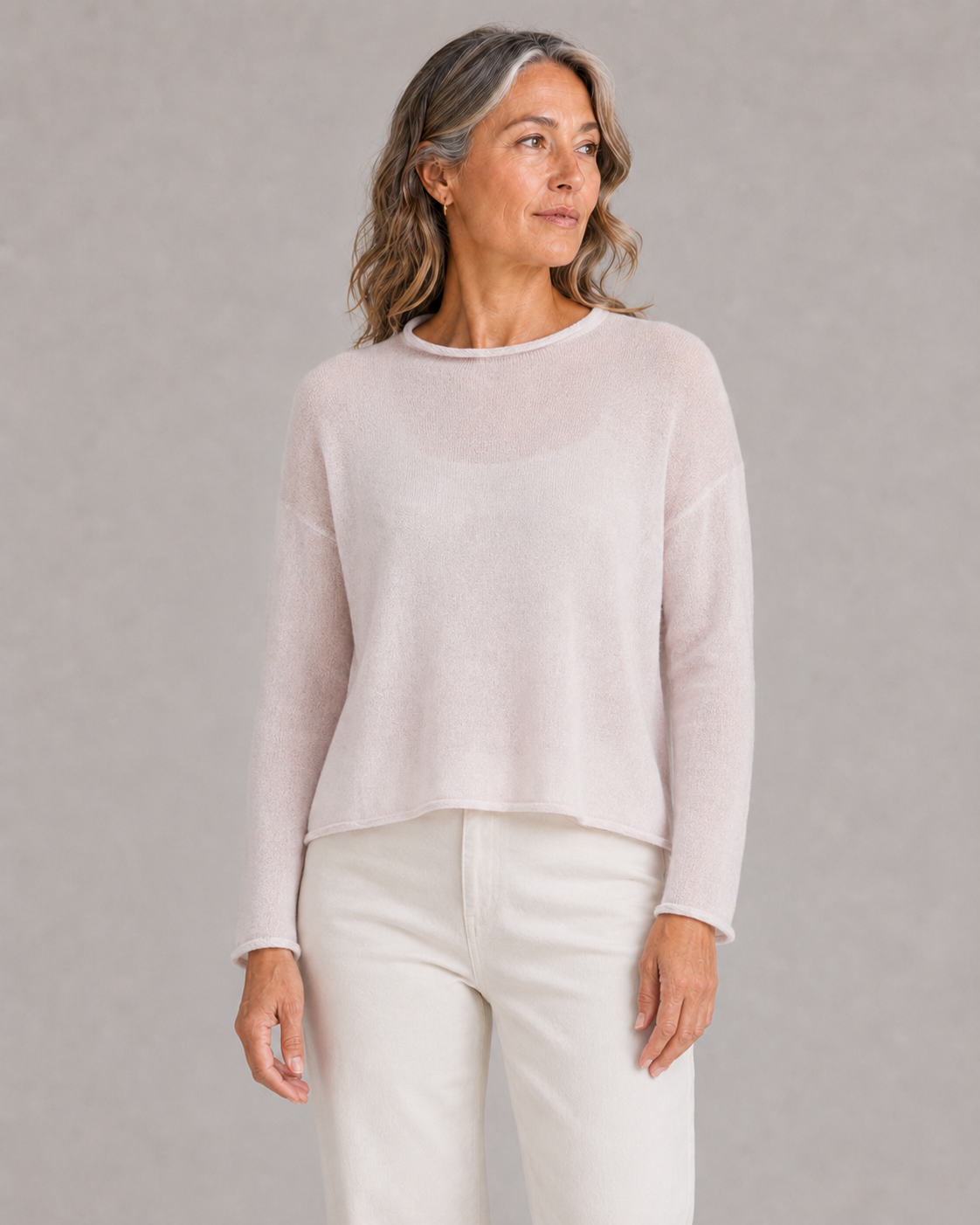
For a dress with a defined waist and fuller skirt, begin with a shorter jumper. Leaving more of the skirt visible can keep the two shapes distinct. Let the jumper fall loose rather than trying to stretch it down over the gathers.
Ochre’s Egg Cropped Boxy Jumper is a useful shape to consider. It has a listed body length of approximately 50cm, a wide rolled neckline and a relaxed body. Its rolled hem gives a softer finish than a deep, close rib.
That length is a starting point, not a promise that it will meet your waist. Compare it with a jumper you own. Finish the outfit with flats or boots that let the skirt move freely.
2. A Longer Jumper With a Straight Dress
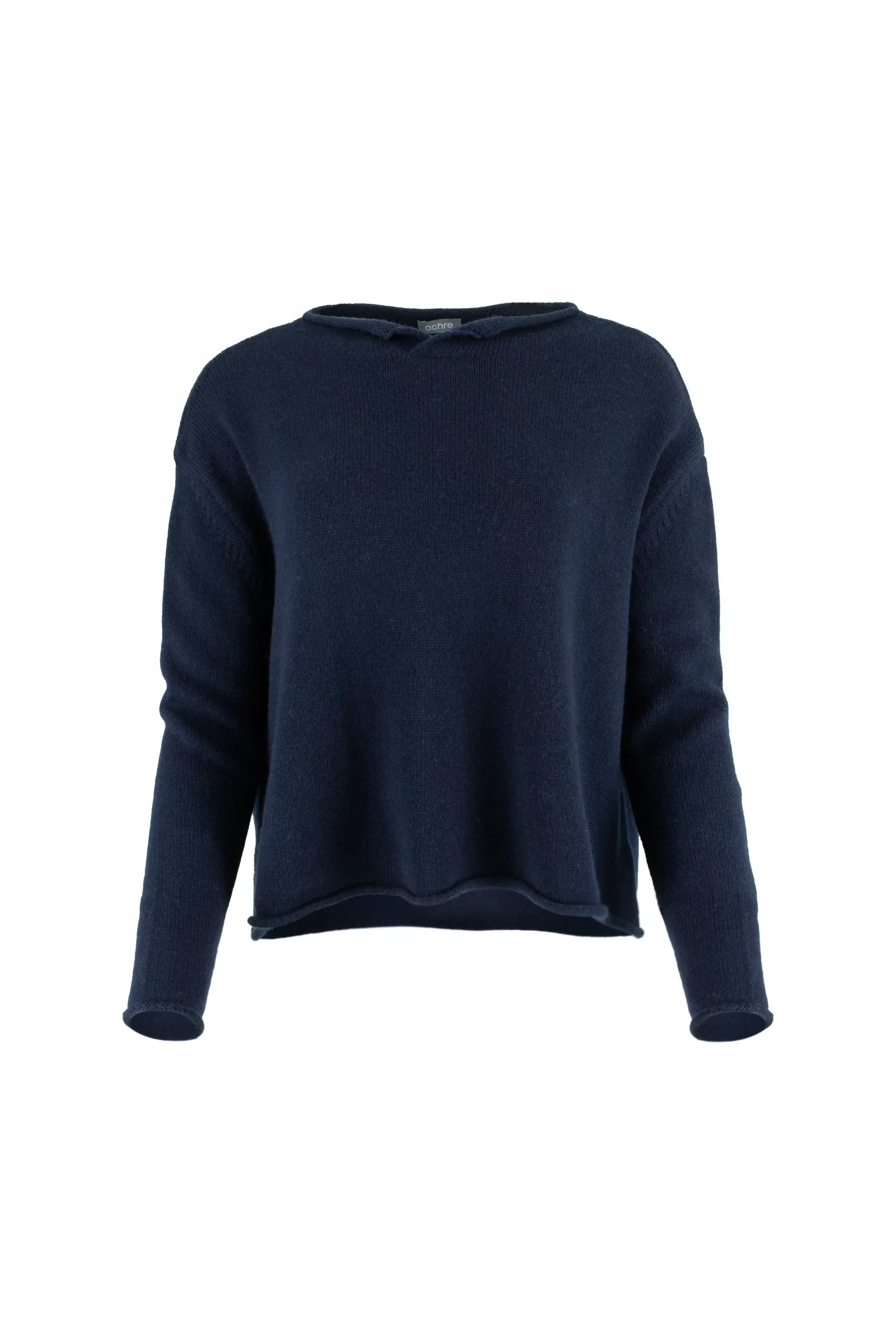
A longer jumper can work well when you prefer a relaxed line through the waist. Start with a straight dress whose lower half hangs cleanly, then check that the knit does not catch at the hips.
The Row Split Neck Cashmere Blend Jumper offers a different proportion from Egg. Its listed length is approximately 66cm, with dropped shoulders, a shallow split neckline and rolled edges. The extra length creates more coverage, so check how much of your dress remains visible.
Wear the hem loose. If the dress gathers into folds underneath, try a smoother dress or another jumper length rather than forcing the fabric into a tuck.
3. A Linen Tunic Dress With a Light, Shorter Knit
A summer dress can become an early-autumn outfit with a light jumper and closed shoes. The key is enough space for the linen to move beneath the knit.
Ochre’s Jane Linen Tunic Dress has a straight, relaxed shape, three-quarter sleeves and side pockets. A shorter jumper can leave much of the dress visible, but check the upper sleeves and pocket area carefully. This is a combination to try on, rather than assume will work from two size labels.
If the dress sleeves fold under the knit, an open cardigan may be more comfortable. Keeping a dress in use should make getting dressed easier.
A Jumper Over a Dress Without Tucking or Tight Belts
It can be tempting to fold a long jumper underneath a belt to create a cropped shape. However, that puts another band of fabric exactly where you may be trying to reduce bulk. A naturally shorter hem is often simpler.
If you enjoy a belt, try it gently over the outfit and check the side view. The knit should fold softly, without being pulled into a tight knot. For an easy everyday outfit, letting a well-chosen hem hang freely usually needs less adjustment.
Check the Neckline, Sleeves and Coat Together
Look at both necklines once the layers are on. A shirt-dress collar can show neatly above a crew neck, while a deeper dress neckline may stay hidden. With a split-neck jumper, make sure any visible edge beneath it looks deliberate.
Next, bend your elbows and reach forward. If the upper sleeves feel tight, sizing up is not always the answer: a different sleeve shape may work better. Finally, add the coat you intend to wear. Two layers that feel comfortable alone can still bunch inside a narrow coat sleeve.
What to Check Before Buying a Jumper for a Dress
Measure a jumper that already works over the dress and compare its length, chest width and sleeves with the product details. Our guide to how a jumper should fit explains how to compare garment measurements.
Also look at the hem finish. A close rib may gather the dress beneath it; a more open hem may let it fall. Neither is inherently better, but they create different results.
- Check the outfit from the front and side.
- Sit down, then stand without pulling either garment into place.
- Raise your arms and notice whether the dress or jumper catches.
- Try your outer layer and shoes before deciding on the proportions.
Questions About Layering a Jumper Over a Dress
Can you wear a jumper over a dress without tucking it?
Yes. Choose a hem that falls where you want it to finish and let it sit naturally. A shorter jumper can leave more of a full skirt visible, while a longer knit can create a relaxed line over a straight dress.
What jumper works best over a midi dress?
Start with the dress shape. A cropped or high-hip jumper often works well with a defined waist or fuller skirt. A longer, softly draping jumper can suit a straight midi dress. Check that the hem moves over the dress rather than gripping it.
Can I layer a jumper over a dress with sleeves?
Yes, if the jumper has room for them. Smooth the dress sleeves before adding the knit, then bend your elbows and reach forward. Gathered shoulders and wide sleeves need more space than a narrow or sleeveless dress.
Can a chunky jumper work over a dress?
It can, especially over a simple dress without thick seams, pockets or gathers beneath the jumper hem. Expect a fuller silhouette. If the outfit must fit beneath a close-cut coat, a finer knit will usually be easier.
How do I stop my dress bunching underneath a jumper?
Check where the bunching starts. A tight hem, bulky waist seam, pocket opening or folded fabric may be catching under the knit. Try a different jumper length or more room through the body, then sit and walk to check the result.
Start with one dress you already love and choose the knit around it. Explore Ochre’s women’s jumpers, comparing the length and hem finish before deciding which shape belongs in your wardrobe.


