
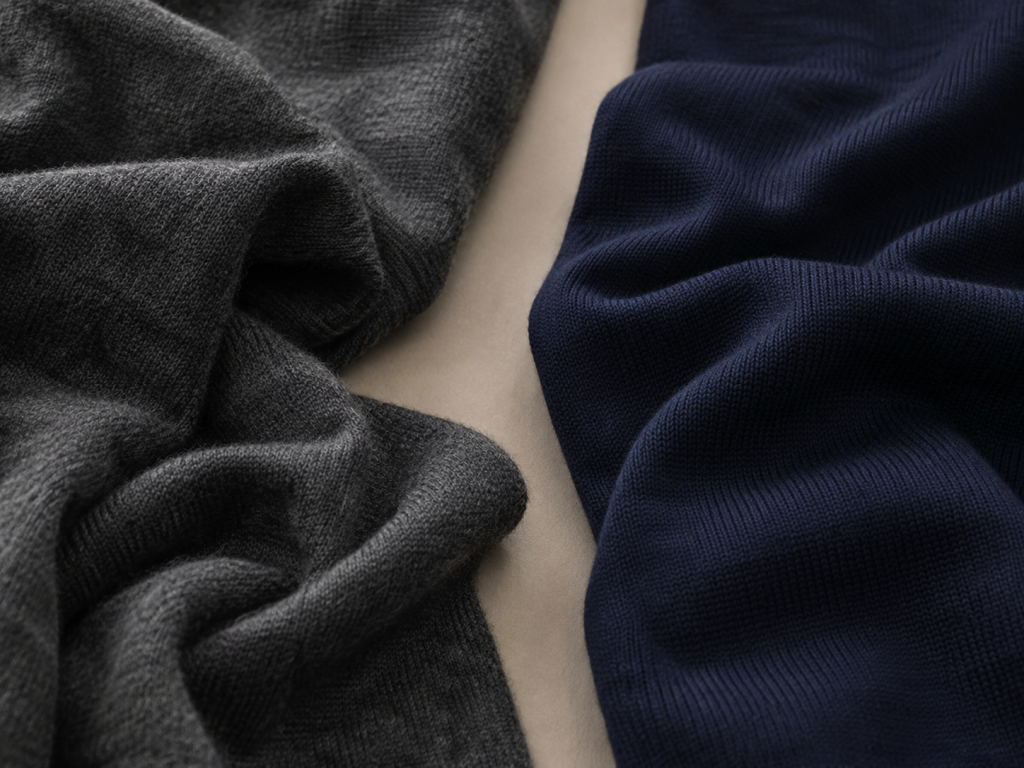
Cashmere vs merino is best understood as a choice between two different kinds of comfort. Cashmere is prized for a soft, lofty handle and impressive warmth without heaviness. Merino wool feels smoother and more resilient, while its breathability makes it easy to wear through changing temperatures.
Neither fibre is automatically better. The right one depends on the garment, the season and how often you expect to wear it. A generous cashmere wrap and a neat merino jumper solve different wardrobe problems, even though both begin with fine animal fibres.
The short answer: choose cashmere when you want exceptional softness, light insulation and fluid drape. Choose merino when you want breathable warmth, dependable shape and an adaptable everyday layer. For many wardrobes, one of each is more useful than treating them as rivals.
Cashmere vs Merino at a Glance
| What matters | Cashmere | Merino wool |
|---|---|---|
| Source | The fine insulating undercoat of cashmere goats | Fine wool grown by Merino sheep |
| Hand feel | Lofty, soft and gently plush | Smooth, fine and softly springy |
| Warmth | Excellent warmth for very little weight | Warm, breathable and comfortable across changing conditions |
| Drape | Fluid and elegant, particularly in wraps and shawls | More elastic and capable of holding a clean garment shape |
| Everyday use | Luxury layers, scarves, wraps and refined knitwear | Jumpers, gilets and versatile work or travel layers |
| Care | Gentle washing, flat drying and careful storage | Care label first; gentle washing and flat drying are usually safest |
This comparison describes the general character of the fibres, not every finished garment. Yarn quality, fibre length, knit density, ply, finishing and construction all influence how a piece feels and performs.
Where Do Cashmere and Merino Come From?
Cashmere begins as a goat’s insulating undercoat
Cashmere is collected from the soft undercoat grown by cashmere goats in cold climates. That undercoat is made to insulate without burdening the animal with unnecessary weight. Once it has been separated from the coarser guard hair, the fine fibre can be spun into yarn with a soft surface and light loft.
This origin helps explain cashmere’s most recognisable qualities: softness, warmth and a feeling of lightness. However, the word “cashmere” alone does not guarantee an excellent garment. Fibre grade, length, sorting, spinning and knit construction still matter.
Merino is fine sheep’s wool
Merino comes from Merino sheep. Its fibres are finer than many traditional wools, so they bend more readily against the skin and are less likely to create the prickly sensation associated with a coarse wool jumper. Natural crimp gives the fibre elasticity and helps a knitted garment recover its shape.
Merino also manages moisture vapour and temperature changes well. That is why it appears in everything from fine everyday jumpers to technical base layers. In classic knitwear, those same properties translate into comfort, neat layering and a garment that does not need to feel bulky to be warm.
Which Is Softer: Cashmere or Merino?
Cashmere usually feels more immediately indulgent. Its surface can be lofty and almost weightless, particularly when the yarn and finishing have been chosen for a gentle handle. Around the neck or over bare arms, that extra softness is easy to notice.
Merino is soft in a cleaner, smoother way. Fine merino can sit comfortably next to the skin, yet it normally has more spring and less of cashmere’s cloud-like bloom. Someone who prefers a polished knit with a calm surface may actually favour merino, even when cashmere feels softer at first touch.
Personal sensitivity matters too. No natural fibre can be promised as itch-free for everyone. The finished yarn, knit texture, seams and what you wear underneath all affect comfort. If your skin is reactive, try the neckline and cuffs against the skin rather than judging softness only with your hand.
Which Is Warmer Without Looking Bulky?
Cashmere is especially valued for warmth in a light layer. The fine fibres and loft help trap air, so a cashmere piece can feel reassuringly warm without the visual weight of a chunky knit. That makes it useful for elegant indoor layers, soft scarves and wraps that can be folded into a travel bag.
The Cashmere Travel Wrap shows that advantage clearly. Its generous shape creates coverage, while its 100% cashmere, two-ply construction keeps the result light enough to drape around the shoulders, over a coat or across the knees on a journey.
Merino offers warmth with a different strength: adaptability. Its fibre structure helps it buffer changes in heat and moisture, so it can remain comfortable when you move between a cool street, a warm shop and a heated room. For a jumper worn from morning to evening, that balance can matter more than maximum insulation.
Breathability and Changing Temperatures
Both fibres are natural and breathable, but merino has the clearer reputation as an all-day regulator. It can absorb moisture vapour within the fibre and release it as conditions change. As a result, fine merino is a strong choice for work, travel and transitional weather, especially when you expect to move between indoors and outside.
Cashmere can also feel comfortable and breathable, yet people often choose it chiefly for softness and light warmth. In a warm room, a removable cashmere wrap may be more practical than a closely fitted cashmere jumper. You can loosen it, fold it or place it over your shoulders as needed.
Think in garments, not only fibres. A fine merino crew neck may feel cooler than a dense cashmere jumper, while an open cashmere wrap gives more control than either. Gauge, ply and silhouette can change the result as much as the fibre name.
Drape, Shape and the Way Each Fibre Layers
Cashmere is often at its most expressive when it can fall and move. In scarves, shawls and relaxed knitwear, its softness creates a fluid outline rather than a rigid one. This is useful when you want warmth that finishes an outfit instead of dominating it.
Merino’s natural elasticity suits garments that need to keep a clearer line. The Scott Crew Neck Jumper, knitted in 100% merino wool, uses a classic crew neck and refined ribbed trims to create a lightweight layer that sits neatly under a jacket or over a shirt.
Neither fibre dictates a single silhouette. A dense cashmere knit can be structured, and a fine merino knit can drape softly. Still, cashmere often feels more fluid and merino more quietly resilient when the yarns are used at a comparable weight.
Durability, Pilling and Cost Per Wear
Pilling does not prove that a garment is fake or poor quality. Loose surface fibres can rub together and form small balls, especially in high-friction areas such as under the arms or where a bag rests. Both cashmere and merino can pill, although the amount depends heavily on fibre length, yarn twist, knit density, finishing and wear.
Merino is often the easier choice for frequent rotation because its spring and shape recovery suit everyday garments. Cashmere can last for years as well, but it rewards gentler handling and a little rest between wears. A cashmere comb may remove light surface pills, provided it is used carefully and only when needed.
Price should therefore be considered alongside use. The better value is the piece that fits your real life and earns regular wear. Before buying, look beyond softness and use the practical checks in How to Tell If Knitwear Will Last: examine the seams, ribbing, recovery, knit consistency and overall construction.
Which Fibre Is Better for Travel?
Merino is excellent for a travel jumper. It layers cleanly, manages changing temperatures and retains a composed shape after hours of sitting. A fine crew neck can work alone, over a shirt or beneath a jacket without taking up much room in a case.
Cashmere is particularly useful as a removable travel layer. A large wrap can act as a scarf outdoors, a soft cover on a flight and an evening layer after arrival. It gives warmth where you need it without committing you to a heavy jumper throughout the day.
If packing space is limited, choose by role: merino for the dependable base garment, cashmere for the flexible finishing layer. Worn together, they provide warmth while keeping the outfit light and refined.
How to Care for Cashmere and Merino
Always begin with the garment’s own care label because yarns, dyes and construction differ. When gentle washing is appropriate, the same calm approach protects both fibres.
- Air the garment between wears so it does not need unnecessary washing.
- Use cool water and a small amount of detergent intended for wool or delicate fibres.
- Support the wet garment fully; do not wring, twist or hang it by the shoulders.
- Press out water gently in a clean towel, then reshape and dry flat away from direct heat.
- Store knitwear clean and folded. Long-term hanging can distort shoulders and length.
- Allow a favourite piece to rest between wears so the fibres can recover.
Care should feel proportionate rather than intimidating. A well-chosen natural-fibre garment does not need constant attention; it needs thoughtful washing, sensible storage and prompt treatment of friction or small surface pills.
Cashmere vs Merino: Which Should You Choose?
Choose cashmere if you value:
- A particularly soft and lofty handle
- Strong warmth without heavy bulk
- Fluid drape in wraps, shawls and relaxed layers
- A refined piece for travel, evenings or gifting
Choose merino if you value:
- Breathable comfort through temperature changes
- Natural elasticity and dependable shape
- A smooth jumper for work and frequent wear
- Easy layering beneath jackets and coats
The final decision is not about awarding one fibre first place. Cashmere brings softness, loft and graceful warmth; merino brings smoothness, resilience and versatility. Choose the fibre that matches the garment’s job, then judge the construction, measurements and care needs of the actual piece.
Frequently Asked Questions About Cashmere vs Merino
Is cashmere warmer than merino?
Cashmere generally provides excellent warmth for very little weight, while merino combines insulation with strong temperature and moisture management. The warmer finished garment still depends on knit density, ply, gauge and coverage.
Which is softer, cashmere or merino?
Cashmere usually feels loftier and more indulgent. Fine merino feels smooth and gentle, with more natural spring. Individual skin sensitivity and the garment’s finishing can matter as much as the fibre name.
Is merino better for everyday wear?
Often, yes. Merino’s elasticity, breathability and clean shape make it particularly useful for frequently worn jumpers and layers. Cashmere can also be worn often, but it benefits from gentler handling and rest between wears.
Does cashmere pill more than merino?
Either fibre can pill when loose surface fibres meet friction. Fibre length, yarn twist, knit density and wear all influence pilling, so it should not be judged by the fibre label alone.
Can cashmere and merino be washed in the same way?
Both often respond well to cool, gentle washing and flat drying, but always follow the individual care label. Some finished garments may have different instructions because of their construction, dye or trim.
Which is better for travel, cashmere or merino?
Merino is an adaptable choice for a travel jumper because it manages temperature changes and layers neatly. Cashmere is excellent as a light, removable wrap. Taking one of each creates a particularly flexible travel wardrobe.
Choose by the way you want the garment to feel, layer and work in your wardrobe.


