
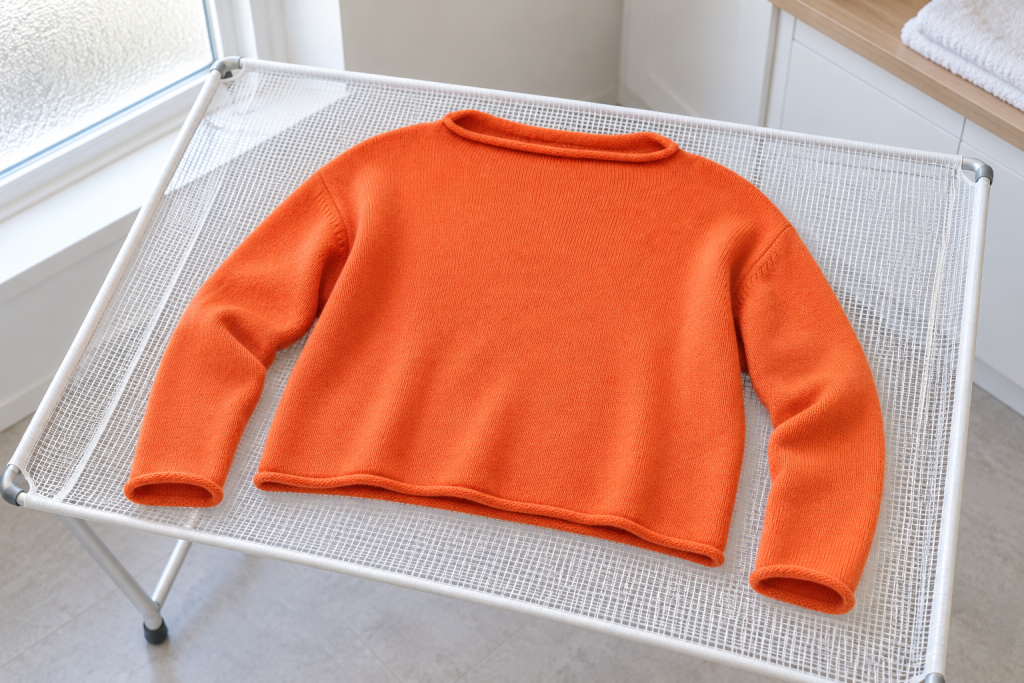
Knowing how to dry a wool jumper starts before you wash it. Have somewhere ready where the wet garment can lie fully supported, with room for the sleeves and hem. A careful wash is easily undermined if the jumper is then lifted by its shoulders or left dangling from a rail.
Read the care label first. The routine below is for washable knitwear that needs flat drying. A dry-clean-only garment, or a piece with a specific drying instruction, needs the method stated on its own label.
Quick answer: Support the wet jumper, press excess moisture into a clean towel, arrange the garment gently in its normal shape and let it dry flat. Keep it away from direct heat. A mesh drying support or dry towel can help you avoid leaving the sleeves or body hanging under their own weight.
How to Dry a Wool Jumper: Set Up First
Choose a clean, stable surface or a flat mesh dryer large enough for the piece. Check the space with the dry jumper before washing it. A rack that fits the body but leaves both sleeves hanging is too small for that arrangement.
Set out two pale, clean towels: one for taking up moisture and another if needed beneath the drying garment. Put the setup somewhere it can stay without being moved repeatedly. Keep it clear of cooking splashes, busy worktops and surfaces that could be damaged by dampness.
If you are still deciding how to clean the piece, our guide to washing rather than dry cleaning cashmere covers that earlier decision. The drying method should follow the wash instructions, not try to repair an unsuitable wash afterwards.
Five Steps From Basin to Drying Space
1. Support the whole garment
Gather the wet jumper carefully and support the body and sleeves together as you lift it. Keep the journey to the towel short. Avoid carrying it by the neckline, a cuff or one shoulder.
2. Take up moisture with a towel
Place the jumper on the towel without pulling it taut. Fold the towel over and press gently so it absorbs water. Do not wring the knit or twist the towel tightly around it. If the towel becomes saturated, use a fresh one instead of pressing harder.
3. Lay it in its intended outline
Transfer it to the drying support. Arrange the body and sleeves with light movements, checking that seams are not twisted beneath the fabric. Follow the original shape: an intentionally wider body or a longer back hem should remain that way.
Reshaping is not a reason to pull the garment to a new size. If you recorded its dry measurements, use them as a gentle reference rather than forcing a reluctant knit into them.
4. Give it air without direct heat
Let air move around the setup. If the towel underneath becomes very damp, replace it while supporting the jumper. A flat mesh dryer can make it easier for air to reach beneath the fabric without draping the garment over a narrow bar.
Woolmark’s drying guidance recommends flat support and warns against direct heat, radiators and hanging wet knitwear. Speed should not come at the expense of shape.
5. Check more than the thin body fabric
Before putting the jumper away, feel the inside of thicker cuffs, the neck, seams and any pockets. Those areas can still hold moisture when the main body seems ready. If any part remains damp, leave it supported for longer.
Where Should You Dry Knitwear Indoors?
Flat mesh support
Useful when it supports the entire garment and lets air reach underneath. Check the rack’s size and stability before placing the wet knit on it.
Towel on a surface
A simple option when there is enough room. Protect the surface and change a damp towel rather than leaving the knit on it indefinitely.
A clear drying area
Leave space around the jumper. Stacking other washing over it or crowding the setup makes checking and rearranging more difficult.
There is no need to build a complicated laundry station. One suitable space is better than repeatedly moving a wet garment around the house. For a large or heavy piece, plan the support before deciding when to wash it.
Drying Mistakes That Change the Shape
| Avoid | Why it causes a problem | Try instead |
|---|---|---|
| Lifting by one cuff | The rest of the wet garment pulls on a small area | Support the body and sleeves together. |
| A hanger or narrow rail | The knit is unsupported or bent over a concentrated pressure point | Use a broad, flat drying support. |
| Leaving sleeves off the edge | They carry their own wet weight | Arrange every part within the supported area. |
| Direct radiator heat | Parts dry unevenly and can be damaged | Let the garment dry naturally away from direct heat. |
How Long Does Drying Take?
There is no dependable time that fits every jumper or room. Fabric thickness, the moisture remaining after washing and the surrounding conditions all affect it. Check the garment rather than assuming it must be ready because a set number of hours has passed.
If you need a particular jumper tomorrow morning, leave a backup outfit ready. A deadline is a poor reason to improvise with direct heat. When comparing future purchases, the weight and construction of a knit can help you think about the space and care routine it will need.
What if the Jumper Already Looks Stretched?
First let it rest flat and assess the dry shape. Uneven drying and permanent fabric damage are not the same thing. Do not keep pulling at a damp area in an attempt to correct it.
Our guide to stretched cashmere explains shape changes in more detail. For a specific Ochre garment, contact us with its name and care-label information before trying another treatment.
Keep the original design in mind. A stepped hem, wide sleeve or relaxed shoulder should not be pulled into a symmetrical rectangle. Arrange the jumper as it was made to sit.
Frequently Asked Questions
Can I hang a wool jumper once it is partly dry?
If the label calls for flat drying, keep the garment supported until it is fully dry. A partly damp knit still carries moisture, especially in thicker areas.
Can I use a tumble dryer on a low setting?
Only if the garment’s care label explicitly allows tumble drying, using the stated programme. A low setting is not permission to tumble dry a piece labelled for flat drying.
What does reshape while damp mean?
Gently arrange the neckline, seams, sleeves and hem back into their intended positions before drying is complete. It does not mean stretching the garment into a different size.
Can wool blends be dried in the same way?
Many knitted blends need flat drying, but the label is the deciding guide. Follow the instructions for the complete garment, including its trims and construction, rather than one fibre in the blend.
A little room to dry properly helps the knit keep the shape you chose.
Explore Ochre’s cashmere and lambswool knitwear

