
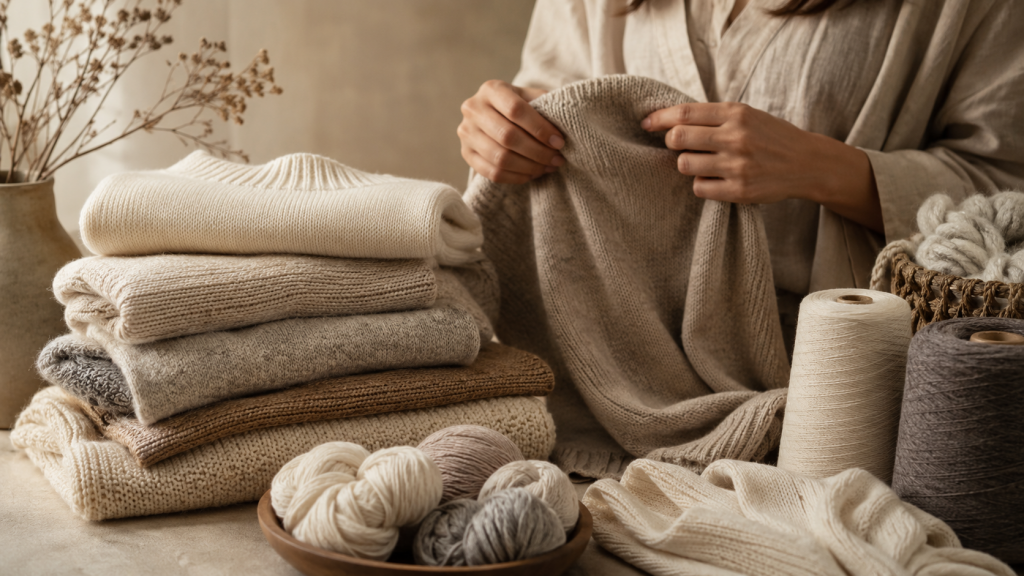
What Slow Luxury Really Means
Ethical knitwear explained clearly means looking beyond softness, colour and price. It asks how a garment is made, what it is made from, who made it, and whether it is designed to be worn for years rather than one short season.
In luxury knitwear, this matters deeply. A jumper can feel beautiful on the skin, yet the real value sits in more than touch alone. It sits in the fibre, the maker, the production choices, the durability and the way the garment fits into a slower wardrobe.
However, ethical knitwear is often described in vague language. Words such as sustainable, conscious, responsible and natural can sound reassuring, but they do not always tell the full story. Therefore, this guide explores what ethical knitwear really means, how to recognise it, and why slow luxury is not about buying more. It is about choosing better and wearing longer.
Ethical Knitwear Explained: A Simple Definition
Ethical knitwear is knitwear made with respect for people, animals, materials and the environment. It does not mean perfection. Instead, it means a brand is making thoughtful choices and giving customers enough information to understand them.
That includes where the yarn comes from, how the garment is produced, whether makers are valued, how long the piece is designed to last, and how honestly the brand communicates its process.
For a smaller luxury brand, ethical knitwear may look practical rather than dramatic. It might mean working with natural fibres, keeping production relationships close, avoiding throwaway trends and creating pieces that can be repaired, cared for and worn often.
Why Ethical Knitwear Matters in Slow Luxury Fashion
Slow luxury fashion is not the same as expensive fashion. Price alone does not make a garment responsible. A true slow luxury piece should offer quality, beauty and usefulness over time.
This is why knitwear is such an important category. Knitwear is intimate. It touches the skin, keeps the body warm and often becomes part of daily life. A loved jumper, scarf or cardigan is not just an outfit choice. It is a comfort object, a layer of confidence and a piece of personal routine.
As a result, ethical knitwear should be judged by wear. Will you reach for it often? Can it move through different seasons? Does it feel good enough to care for properly? If the answer is yes, it has a better chance of becoming part of a slower wardrobe.
Look First at the Fibre
Fibre is the foundation of knitwear. It affects warmth, softness, breathability, drape, care and longevity. Natural fibres are often central to ethical knitwear because they can be comfortable, useful and long-lasting when produced and cared for well.
Cashmere offers softness and warmth without unnecessary bulk. Lambswool brings traditional body and texture. Merino wool is smooth, breathable and practical for layering. Organic cotton feels clean, soft and comfortable in milder weather.
At Ochre, natural fibres are part of the wider story. The brand works with cashmere, lambswool, merino, linen and organic cotton, with a focus on garments made to last rather than pieces designed only for a passing trend. You can explore this approach through Ethical knitwear made in Nepal.
Why Organic Cotton Has a Place in Ethical Knitwear
Organic cotton is especially useful for customers who want breathable knitwear for spring, summer evenings and indoor layering. It can feel soft and familiar, but still refined when knitted into considered shapes.
Certifications can help here. For example, GOTS is one of the best-known standards for organic textiles because it includes environmental, human-rights and social criteria across the textile value chain. A certification alone does not tell every part of a brand story. However, it gives shoppers a clearer signal than vague marketing language.
For breathable natural fibre layers, the organic cotton knitwear collection is a strong place to begin.
Ethical Knitwear Explained Through the People Who Make It
A garment is never just material. It is also labour, skill and time. Ethical knitwear asks us to remember the hands behind the finished piece.
This is where transparency matters. Customers do not need a technical supply chain report to care about makers. They need clear, honest information about where garments are produced and what kind of values guide that production.
Ochre Knitwear’s story is closely linked to skilled production in Nepal. The brand’s Kathmandu story gives useful context about the workshop relationships behind the garments and why responsible production is part of the brand’s identity.
In a slow luxury wardrobe, this human connection changes how a garment feels. It becomes less disposable. It carries a sense of place, skill and continuity.
How to Recognise Ethical Knitwear When Shopping
Ethical knitwear should not require guesswork. Although no product page can answer every question, a good brand should make the important details easy to find.
When shopping, look for signs such as:
- clear fibre content rather than vague fabric descriptions
- information about where garments are made
- care guidance that encourages longer wear
- natural fibres chosen for comfort and usefulness
- timeless shapes instead of trend-only designs
- repair, care or longevity advice
- honest sustainability language rather than exaggerated claims
Also, look at what the brand does not say. If every claim sounds perfect but there are few details, be cautious. Ethical fashion is complex. The most trustworthy brands usually speak with care rather than making impossible promises.
Slow Luxury Is About Cost Per Wear, Not Just Price
One of the easiest ways to think about ethical knitwear is cost per wear. A cheaper jumper worn three times and forgotten is not truly good value. A better knit worn every week for years becomes part of life.
This does not mean every customer needs the most expensive piece. Instead, it means the purchase should be considered. The question is not only “Can I afford this?” It is also “Will I wear this enough to honour the material and work behind it?”
A beautifully made cardigan, jumper or scarf can support a smaller wardrobe because it does more. It layers, travels, repeats and softens with use. Therefore, ethical knitwear is closely connected to personal habits, not just brand claims.
Choosing Knits That Last Beyond One Season
Longevity is a quiet form of sustainability. When a garment stays useful, it reduces the need for constant replacement. This is why timeless design is not boring. It is practical, elegant and often more responsible.
Look for shapes that suit your real life. A relaxed jumper may work across weekends, travel and home. A refined cardigan may serve workdays and evenings. A soft scarf may be used almost daily through winter.
Fibre blends can also be useful. A cashmere and lambswool blend, for example, can bring softness, warmth and structure together. For tactile, long-wearing natural fibre layers, browse cashmere and lambswool blend pieces.
Ethical Knitwear and Care: The Part Customers Control
Ethical fashion does not end at checkout. The way a garment is worn, washed and stored has a major effect on its life.
Good knitwear usually needs less washing than many people think. Airing between wears can keep fibres fresh. Folding instead of hanging helps preserve shape. Gentle washing, careful drying and proper storage all protect the garment.
These habits may feel small, but they matter. They show respect for the fibre and the maker. In addition, they help keep the piece in your wardrobe for longer.
Questions to Ask Before Buying Ethical Knitwear
Before buying a new knit, pause for a moment. A thoughtful purchase often starts with better questions.
- What fibre is this made from?
- Will it work with clothes I already own?
- Can I wear it in more than one season?
- Does the brand explain where or how it is made?
- Will I care for it properly?
- Does it feel timeless enough to keep?
If a piece answers these questions well, it is more likely to earn its place. If not, it may be better to wait.
Ethical Knitwear Explained for Gift Giving
Knitwear gifts can be beautiful, but they should be chosen with care. A good gift is not just luxurious. It is useful, personal and easy to wear.
Scarves, wraps, simple cardigans and natural fibre jumpers often make thoughtful choices because they bring comfort as well as style. However, think about the recipient’s lifestyle. Someone who travels often may love a wrap. Someone who prefers simple dressing may use a classic jumper more often than a statement piece.
When the gift is made from natural fibres and designed for repeat wear, it feels generous without encouraging waste.
Why Ethical Knitwear Is Not About Perfection
No garment is impact-free. Natural fibres still require land, water, animals, people, transport and care. Synthetic fibres have their own concerns. Dyeing, spinning, knitting and shipping all carry consequences.
Therefore, ethical knitwear should not be sold as a perfect answer. Instead, it should be understood as a better question. How can we buy less? How can we choose pieces with greater care? How can brands make more responsibly, and how can customers keep garments in use for longer?
This balanced approach feels more honest. It also respects the intelligence of the customer.
Building a Slower Wardrobe with Natural Fibre Knitwear
A slower wardrobe does not need to be severe. It can be warm, expressive and deeply enjoyable. The difference is intention.
Start with pieces you will use often: a breathable cotton layer, a soft winter jumper, a cardigan, a scarf and one refined accessory. Then build slowly. Let each piece prove its place before adding another.
Above all, choose garments that make daily dressing easier. The most ethical piece is often the one you keep reaching for, because it fits your life beautifully.
Explore natural fibre knitwear designed for softness, usefulness and long-term wear.
Final Thoughts: The Quiet Value of Ethical Knitwear
Ethical knitwear is not a slogan. It is a relationship between fibre, maker, brand and wearer. It asks for care at every stage: sourcing, knitting, choosing, wearing and storing.
In slow luxury fashion, this is where true refinement lives. Not in excess, and not in constant novelty, but in garments that feel good, do good where possible and remain loved over time.
When ethical knitwear is explained simply, the message becomes clear. Buy with thought. Wear with pleasure. Care with patience. Keep what is beautiful.
FAQs
What does ethical knitwear mean?
Ethical knitwear means knitwear made with greater care for people, fibres, animals and the environment. It also means honest information about materials, production and garment longevity.
Is ethical knitwear the same as sustainable knitwear?
They are closely linked, but not identical. Ethical knitwear focuses strongly on people, sourcing and production choices. Sustainable knitwear also considers environmental impact, durability and long-term use.
How can I tell if knitwear is ethical?
Look for clear fibre details, production information, responsible sourcing claims, care advice and honest brand language. Be cautious of vague claims that do not explain how or where garments are made.
Are natural fibres always more ethical?
Natural fibres can be a good choice, but they are not automatically perfect. Fibre quality, sourcing, animal welfare, farming, production and garment care all matter.
Why does slow fashion matter for knitwear?
Slow fashion matters because good knitwear can be worn repeatedly for years. Choosing fewer, better pieces reduces waste and helps garments feel more personal and valuable.


